The original Apple iPod changed the way we listen to music 25 years ago
The original Apple iPod launched 25 years ago today, revolutionizing how we carry and play music.
By Anna Nowak ·
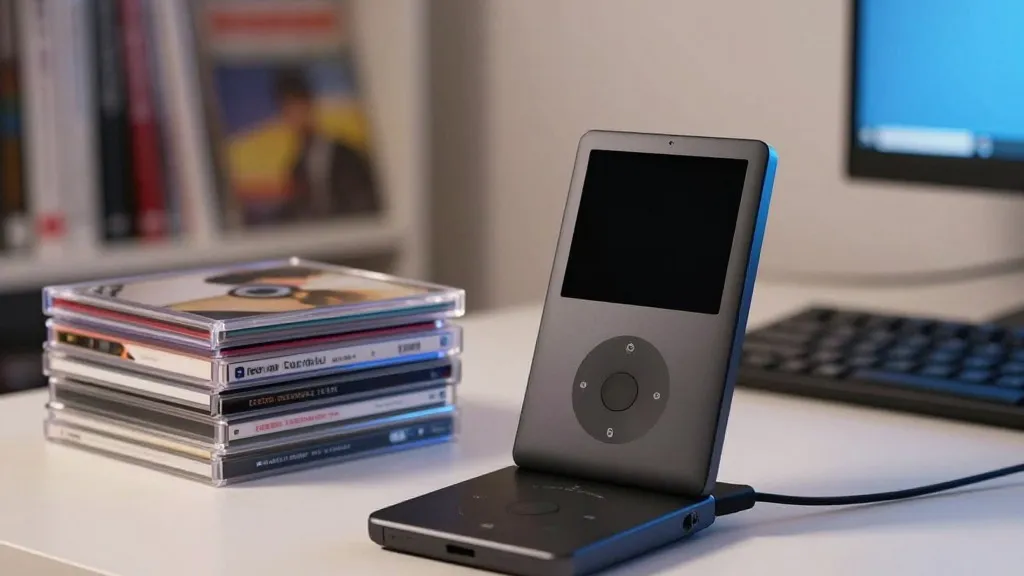
The original Apple iPod debuted 25 years ago today, when Steve Jobs unveiled the device that would transform the way we listen to music. At the time, the market for portable digital music players was already populated by companies like Creative, Sony, and Sonic Blue, but none had yet found the right formula for success. Jobs believed that the iPod, with its 5 gigabytes of storage, could hold 1,000 songs in a package no larger than a deck of cards, making it the perfect music player for anyone who wanted their entire library in their pocket. This claim alone was enough to set it apart from the competition.
The iPod’s design was also a breakthrough, with its ultra-compact form factor made possible by the latest advances in hard drive technology. Weighing only 6.5 ounces, it was lighter than most cell phones of the time, and its single FireWire cable enabled fast file transfers, charging, and even use as a portable hard drive. Jobs demonstrated the iPod’s speed by claiming it could transfer an entire CD of MP3s in just five to ten seconds, far faster than the USB devices of the era.
The iPod’s features included 20-minute skip protection, fast file transfers, and a specially designed scroll wheel for easy navigation. It was also the first and only music player with FireWire, a connection that set it apart from its competitors. Its battery life was impressive, offering 10 hours of continuous playback and 80% charge in just one hour.
The iPod’s Auto-Sync feature with iTunes made it even more convenient, allowing users to keep their music libraries in sync with their pocket player. Jobs predicted that the iPod would become the center of the digital lifestyle, and for many years, it was. However, its star faded over time, and the last iPod, the 7th-generation iPod Touch, was released in May 2019. The product line was officially discontinued in May 2022, ending an era in portable music technology.
Source: Tom's Hardware